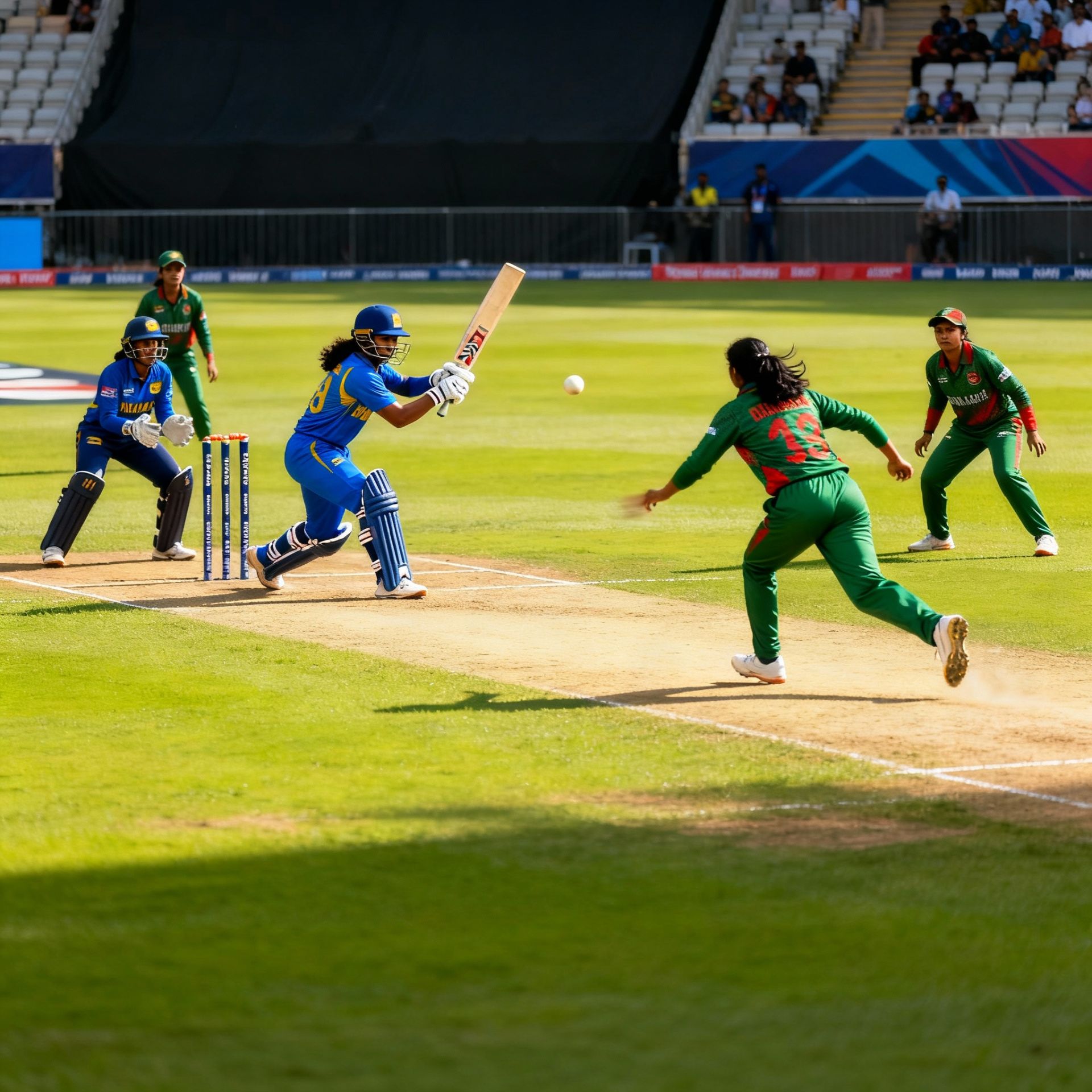
The do-or-die encounter between Sri Lanka Women and Bangladesh Women at the Dr. DY Patil Sports Academy in Navi Mumbai on October 20, 2025, delivered all the drama expected from a virtual knockout match. In a contest where the loser would see their semi-final dreams evaporate, Bangladesh emerged victorious, dismissing Sri Lanka for just 202 runs and keeping their World Cup campaign alive.
Shorna Akter's Devastating Spell Crushes Sri Lankan Hopes
Teen sensation Shorna Akter once again proved to be Bangladesh's match-winner with a sensational bowling performance that tore through Sri Lanka's middle and lower order. The 18-year-old leg-spinner finished with remarkable figures of 10-4-27-3, claiming the crucial wickets that triggered a dramatic Sri Lankan collapse.

Shorna's spell was a masterclass in pressure bowling. After being introduced at the halfway mark of the innings, she struck at the most critical juncture, breaking the dangerous 74-run partnership between Hasini Perera and Nilakshika Silva that threatened to take the game away from Bangladesh. Her dismissal of Silva, caught at short third after miscuing a shot, opened the floodgates.
The young star's ability to strike in clusters became evident as she removed Anushka Sanjeewani with a caught-and-bowled in her very next over, before returning to claim the prized scalp of Hasini Perera, who fell trying an ambitious reverse sweep. This performance added to Shorna's growing reputation as one of the most exciting young talents in women's cricket, following her record-breaking 51 off 34 balls against South Africa earlier in the tournament—the fastest fifty by a Bangladesh batter in ODI history.
Hasini Perera's Heroic Knock Goes in Vain
Despite the loss, Sri Lanka found a rare bright spot in Hasini Perera's magnificent maiden international half-century. The left-handed batter's 85 off 99 balls, studded with 13 boundaries and a six, was a performance worthy of a winning cause.
Perera's innings was marked by both skill and fortune. She survived two dropped catches—on 23 and 55—and looked increasingly comfortable as her innings progressed. Her knock ensured she became only the third Sri Lankan batter alongside captain Chamari Athapaththu (46) and Nilakshika Silva (37) to reach double figures in a disjointed batting display.
The 29-year-old also achieved a personal milestone during her innings, reaching 1,000 ODI runs, though the achievement was overshadowed by the team's defeat. Her partnership with Silva added 74 crucial runs off 75 deliveries, momentarily stabilizing Sri Lanka after they had stumbled from a promising 72-1 to a precarious 100-4.
Captain Chamari Athapaththu Creates History Despite Defeat
Sri Lankan captain Chamari Athapaththu etched her name in the history books during her innings of 46 off 43 balls, becoming the first Sri Lankan woman to score 4,000 ODI runs. The 35-year-old's aggressive knock, which included six boundaries and two sixes, helped establish a strong 72-run opening partnership with Perera after Vishmi Gunaratne's first-ball dismissal.
Athapaththu's milestone made her the fourth Asian and 20th female batter overall to cross the 4,000-run mark in Women's ODIs, with her nearest Sri Lankan competitor, Shashikala Siriwardene, trailing far behind at 2,029 runs. However, the historic achievement couldn't prevent her team's elimination from the tournament.
Bangladesh's Complete Team Performance
Beyond Shorna Akter's heroics, Bangladesh's victory was built on a complete bowling effort. Rabeya Khan supported admirably with figures of 2-39, claiming the crucial wicket of Athapaththu, while Nahida Akter and Nishita Akter Nishi chipped in with a wicket each. Only Ritu Moni went wicketless among the Bangladesh bowlers, highlighting the collective pressure they maintained throughout.
The fielding, though not flawless with several dropped chances, showed significant improvement from their previous outings. Bangladesh's use of DRS was particularly impressive, with successful reviews leading to the dismissals of both Gunaratne on the first ball of the match and Sugandika Kumari later in the innings.
Marufa Akter set the tone with the very first delivery, trapping Gunaratne LBW. Although initially given not out, Bangladesh's review showed three reds, giving them the perfect start they needed.
Sri Lanka's Catastrophic Collapse
What made Sri Lanka's defeat particularly painful was how they self-destructed after being in a position of strength. From a promising 174-5 in the 32nd over, they lost their last five wickets for just 28 runs in 103 deliveries.
The collapse was triggered by a combination of poor shot selection, bad luck, and excellent Bangladesh bowling. Harshitha Samarawickrama's run-out after calling for a non-existent second run exemplified the panic that set in. Kavisha Dilhari's bizarre dismissal—stumped after the ball ricocheted off wicketkeeper Nigar Sultana Joty onto the stumps while her foot was momentarily in the air—summed up Sri Lanka's misfortune.
The lower order's inability to contribute was glaring. The partnership between Udeshika Prabodhani and Malki Madara lasted 73 deliveries but yielded just 18 runs, as Sri Lanka prioritized survival over scoring in the final overs.
Match Turning Points
Several moments proved decisive in this contest:
The First-Ball Wicket: Marufa Akter's successful LBW appeal against Gunaratne on the very first delivery set a nervous tone for Sri Lanka's innings.
Athapaththu's Dismissal: With the captain looking ominous at 46, Rabeya Khan's breakthrough ended the threatening opening partnership and shifted momentum.
The 74-Run Stand: Perera and Silva's counterattacking partnership briefly threatened to take the game away from Bangladesh before Shorna intervened.
Shorna's Triple Strike: The teenager's dismissals of Silva, Sanjeewani, and Perera in quick succession effectively ended the contest.
Tournament Context and Implications
This match held enormous significance for both teams. Coming into the encounter, both sides had identical records—two points from five matches—with Bangladesh's points earned through their opening win against Pakistan, while Sri Lanka's came from rain-affected no-results against Australia and New Zealand.
The defeat eliminated Sri Lanka from semi-final contention in what had been a disappointing campaign for the co-hosts. Their struggles were compounded by weather disruptions in Colombo, which prevented them from building momentum. The loss also extended their winless streak in the tournament, with their best performance being the washed-out high score of 258-6 against New Zealand.
For Bangladesh, the victory kept alive their slim hopes of reaching the semi-finals and marked a potential turning point in their ODI rivalry with Sri Lanka. Coming into the match, Bangladesh had never beaten Sri Lanka in an ODI, making this win even more significant.
Historical Rivalry Gets New Chapter
The match added a significant chapter to the Bangladesh-Sri Lanka women's cricket rivalry. The two teams had met four times previously in ODIs, with Sri Lanka winning two and the other two being washed out, giving them a perfect record before this encounter.
Bangladesh's spirited campaign throughout the tournament, which included their historic opening win against Pakistan and close contests against England and South Africa, demonstrated the rapid progress of women's cricket in the subcontinent. Despite the thrashing they received from Australia in their previous match, the Tigresses showed remarkable resilience to bounce back in this crucial encounter.
The Road Ahead
With this victory, Bangladesh moved to 4 points and remained in mathematical contention for the final semi-final spot, though their path remained difficult with superior teams ahead of them in the standings. Australia, England, and South Africa had already secured three of the four semi-final positions, leaving five teams fighting for the final spot.
For Sri Lanka, the defeat marked the end of a disappointing World Cup campaign that never truly got off the ground. The co-hosts finished with zero wins from completed matches, their campaign hampered by weather disruptions, batting collapses, and an inability to perform under pressure in crucial moments.
Young Stars Shine Bright
The match showcased the emergence of young talent in women's cricket, particularly Bangladesh's Shorna Akter. The 18-year-old's performances throughout the tournament—including her fastest fifty against South Africa and this match-winning spell—marked her as one of the breakout stars of the competition.
Born on January 1, 2007, Shorna had already made waves at the 2023 Under-19 Women's T20 World Cup, where she was named in the ICC Team of the Tournament. Her all-round abilities—combining leg-spin bowling with explosive batting—have drawn comparisons to some of the game's greats.
The teenager's fearless approach and ability to deliver in high-pressure situations suggested she would be a cornerstone of Bangladesh's cricket future for years to come. Her record-breaking performances in the tournament demonstrated the depth of talent emerging from Bangladesh's cricket development programs.
Tactical Battle and Conditions
The Dr. DY Patil Sports Academy pitch in Navi Mumbai provided a good batting surface with some assistance for spinners as the match progressed. The red soil nature of the pitch meant it dried out as the day went on, creating variable bounce that troubled batters in the latter stages.
Bangladesh captain Nigar Sultana Joty's decision to bowl first after losing the toss proved vindicated, as her spinners exploited the conditions brilliantly in the middle and death overs. The temperature in the high 30s made conditions uncomfortable for the players but ensured a full game without the rain interruptions that had plagued earlier matches in Colombo.
Sri Lanka's decision to bat first under hot and humid conditions perhaps reflected their confidence in their batting unit, but the strategy backfired as they failed to post a competitive total on what was essentially a good batting pitch.
The match demonstrated once again that in women's ODI cricket, totals around 200 remain competitive if bowled and fielded well, with Bangladesh's disciplined performance showing that restrictive bowling can overcome batting-friendly conditions.
This comprehensive victory not only kept Bangladesh's World Cup dreams alive but also served notice that they were no longer the pushovers they once were in international cricket, capable of competing with—and beating—established teams when it mattered most.