Beyond Meat's story reads like a tech thriller: a revolutionary company that promised to transform the global food system has now teetered on the brink of bankruptcy, shed 99% of its market value, and become the accidental poster child for retail investor drama. But beneath the meme-stock frenzy and jaw-dropping stock price swings lies a fascinating tale about market hype, consumer behavior shifts, and the brutal reality of scaling food innovation.
From Hero to Zero: The Meteoric Rise and Dramatic Fall
When Beyond Meat went public in May 2019, it was nothing short of historic. The company's shares debuted at $46—significantly above the $25 IPO price—and the stock eventually peaked at an eye-watering $239.71 in July of the same year. The company had a market capitalization of roughly $3.8 billion, and everyone wanted a piece of the plant-based revolution.
The timing seemed perfect. Millennials were becoming more health-conscious, climate anxiety was rising, and the idea of "bleeding" plant-based burgers that tasted like real meat was genuinely revolutionary. Beyond Meat's CEO Ethan Brown, who founded the company in 2009, positioned it as more than just a food company—it was a solution to climate change, animal welfare, and human health all wrapped into one delicious patty.
Then reality set in.
By Q2 2025, Beyond Meat reported a staggering 20% drop in revenue. The company's debt ballooned to approximately $1.3 billion, and it was burning through cash faster than it could generate it. In October 2025, the company announced an early settlement of a debt exchange offer, issuing 316 million new shares and converting $208.7 million in convertible notes—a move that decimated investor confidence and sent shares tumbling by as much as 58%.
The stock eventually collapsed below $1 per share, down from that $239.71 peak—a loss of more than 99%. For context, if you'd invested $25,000 when Beyond Meat went public, by October 2025 that investment would have been worth around $250.
The Core Problem: A Category That Can't Compete on Taste or Price
Beyond Meat's fundamental challenge is surprisingly straightforward: the entire U.S. plant-based meat category is struggling. The industry saw a 28% drop in unit sales and an 18% drop in revenue to $1.17 billion over just two years. Beyond Meat's once-dominant market position has been eroded from multiple angles simultaneously.
Price Sensitivity in Tough Times
Perhaps the biggest issue is that plant-based meat products cost significantly more than conventional meat. According to research from the Good Food Institute, plant-based products sell at prices up to two times higher than their conventional counterparts—and in an inflationary environment, consumers are simply abandoning premium products. About 35% of consumers who have tried plant-based meat but haven't purchased recently cite price as the reason they won't buy again.
This creates a vicious cycle: supermarkets, facing declining demand, have moved plant-based products from refrigerated cases next to meat to freezer sections where they're harder to find, further tanking sales.
A Brutal Competitive Landscape
Beyond Meat isn't just facing smaller rivals anymore. Impossible Foods, their main competitor, has made serious gains with lower pricing and strategic partnerships with major chains like Burger King and Starbucks. But the real threat comes from Big Meat itself. Giant processors like Tyson Foods ($43 billion in annual revenue) and JBS are now launching their own plant-based lines with the distribution scale and capital depth to undercut Beyond Meat's margins indefinitely.
Taste and Texture Still Aren't Solved
Despite the company's claims about product quality, consumer perception remains a problem. In a recent survey, 54% of consumers said they wouldn't choose a plant-based meat entrée at a restaurant because of taste concerns, and 42% cited texture issues. The irony is painful: Beyond Meat built its reputation on taste, but the market still isn't convinced.
The Environmental and Health Promise That Isn't Enough
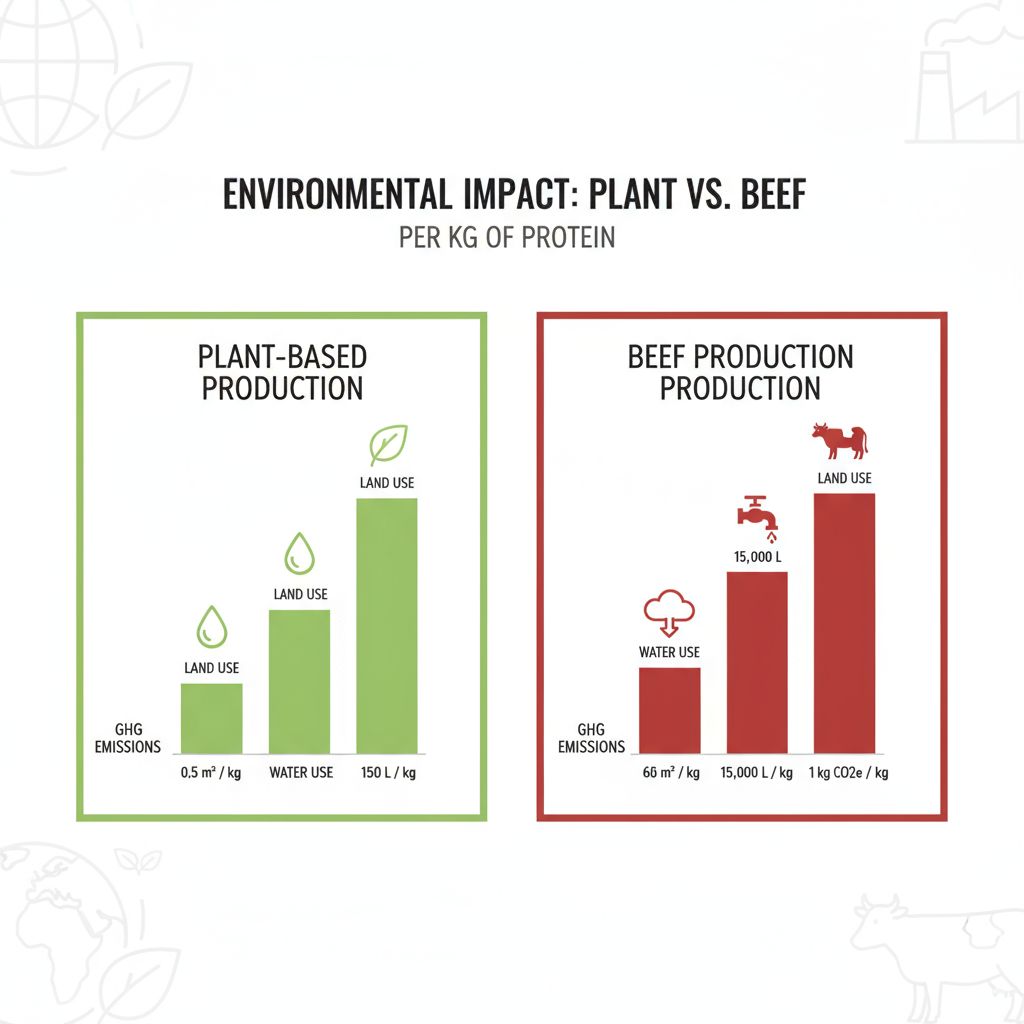
Here's where things get more interesting. Beyond Meat's environmental claims are genuinely compelling. According to Life Cycle Assessment studies, the Beyond Burger generates 10x less greenhouse gas emissions than a traditional quarter-pound beef patty, uses 97% less water, requires 97% less land, and uses 37% less non-renewable energy.
For Beyond Steak specifically, the numbers are even more dramatic: 84% fewer greenhouse gas emissions, 93% less water consumption, 88% less land use, and 65% less non-renewable energy compared to pre-cooked beef. The company's products also achieve 94% less terrestrial acidification, 95% less marine eutrophication, and 77% less freshwater eutrophication.
On the health front, a Stanford University clinical study published in the American Journal of Clinical Nutrition found that replacing animal-based meat with Beyond Meat products over an 8-week period led to improvements in cholesterol levels (including LDL), reduced heart disease risk factors, and lower TMAO levels.
The problem? These benefits aren't translating into consumer purchasing power. Environmental and health consciousness are motivating factors, but they're not enough to overcome price sensitivity and taste preferences when families are struggling with inflation.
The Strategic Pivot: From "Meat Replacement" to Mycelium
Recognizing that traditional plant-based formulations weren't cutting it, Beyond Meat has been aggressively pivoting toward what the company calls "clean-label" products and more innovative ingredient approaches.
The Beyond IV Platform
In 2024, Beyond Meat introduced its "Beyond IV" reformulated product line, developed through collaboration with medical and nutrition experts. The new Beyond Burger and Beyond Beef products feature:
21g of protein per serving (exceeding 80/20 beef)
Ingredients sourced from peas, brown rice, red lentils, and fava beans
Avocado oil replacing previous oils, reducing saturated fat by 60%
20% less sodium than previous versions
These reformulated products received certifications from both the American Heart Association and the American Diabetes Association, confirming they meet evidence-based nutritional guidelines.
The Mycelium Play
The most interesting innovation is Beyond Steak Filet, made from mycelium, fava bean protein, and avocado oil. The product launched in foodservice in June 2024 and started appearing in restaurants like BOA Steakhouse, Ladybird (NYC), and Veggie Grill locations.
Mycelium—the root-like structure of filamentous fungi—is generating significant industry buzz because it offers a complete protein with a low environmental footprint that can be engineered to match both the flavor and texture of meat. The Beyond Steak Filet even includes the "bleeding effect" with plant-based juices that mimics rare steak.
The product delivers 28g of protein per serving with just 1g of saturated fat and 0mg cholesterol.
Test Kitchen and Direct-to-Consumer Strategy
Beyond Meat has also launched the "Beyond Test Kitchen," a customer-led product development approach where new products are released in limited quantities through fashion-industry-style "drops" on their direct-to-consumer website. This strategy allows the company to gather feedback, build hype, and maintain higher margins without relying on wholesale partners.
The October 2025 Plot Twist: Meme Stocks and Walmart
Just when it seemed Beyond Meat was headed for the bankruptcy court, two unlikely events sparked a dramatic stock rally.
The Meme Crowd Returns
On October 20-21, 2025, Beyond Meat shares surged over 146% in a single day. What triggered the reversal? Reddit traders launched a campaign titled "MAKE $BYND GREAT AGAIN," calling attention to Beyond Meat's extremely high short interest (over 63% of shares) and tiny float. The stock had all the characteristics of a classic meme-stock target: penny-stock status, high short interest, and nostalgic retail investor interest.
A Dubai-based trader named Dimitri Semenikhin (known online as Capybara Stocks) announced he'd purchased about 4% of Beyond Meat's outstanding shares and posted videos predicting the stock could reach $6 per share, representing a 104% gain from the intraday highs.
Trading volume exploded to 1.2 billion shares—roughly 30 times the 30-day average. The stock was added to the Roundhill Meme ETF, which sparked additional buying pressure and triggered a short squeeze.
The Walmart Partnership
Then, on the same trading day, Beyond Meat announced a significant distribution partnership: its Beyond Burger 6-pack and Beyond Chicken Pieces would be available in 2,000 Walmart locations across the country. This was the kind of retail partnership that Beyond Meat desperately needed, though the timing—coinciding with the meme-stock surge—meant the genuine business news got somewhat lost in the noise.
By end of trading on October 21, the stock had soared as high as $3.62, though investor enthusiasm remained deeply divided. Among the eight analysts tracking Beyond Meat, five issued "sell" or "strong sell" ratings, while three suggested holding, with an average price target of just $2.42 per share.
What's the Plant-Based Market Worth Anyway?
The long-term opportunity remains substantial, despite near-term challenges. The global plant-based meat market was valued at approximately $7.17 billion in 2023 and is projected to reach $24.77 billion by 2030, growing at a 19.4% CAGR. Other projections are even more bullish, with some estimates suggesting the market could reach $100 billion by 2033.
North America currently dominates with a 36-38% market share. Asia-Pacific is expected to grow at an even higher CAGR of 13.52%, driven by rising health consciousness and environmental concerns in developing countries.
Beyond Meat's slice of this pie, however, has been shrinking. The company held approximately 25% market share in the global plant-based meat segment in 2024, but that's under pressure from competitors large and small.
The Broader Industry Trends
Consumer Aspiration vs. Reality
Research from the Good Food Institute shows that roughly 73% of U.S. adults are open to consuming plant-based products in the future. Among adults who eat meat, about 33% are actively trying to reduce their meat and poultry intake. This suggests a genuine behavioral trend toward flexitarianism.
However, actual purchasing behavior remains far more muted. Plant-based products represent less than 3% of total packaged meat sales today, and most households buying plant-based products (96%) still purchase conventional meat.
Who's Actually Buying Plant-Based Meat?
Beyond Meat primarily targets "flexitarians"—consumers who want to reduce meat intake without sacrificing taste or convenience. Early adopters skewed younger and urban, but as the category has matured, price sensitivity has become paramount.
The most engaged plant-based meat buyers spend up to a third of their total meat purchases on plant-based alternatives, but this segment remains relatively small.
Frequently Asked Questions
The Bottom Line: Innovation Meets Market Reality
Beyond Meat's journey from unicorn to penny stock represents a brutal collision between venture capital-fueled hype and market fundamentals. The company had genuine innovation, a compelling mission, and real product advantages—but it couldn't overcome consumer price sensitivity, evolving competitive dynamics, and the fundamental challenge that plant-based meat is still a premium product in a market increasingly focused on value.
The Walmart partnership and mycelium innovations suggest Beyond Meat isn't finished, but the company faces a binary outcome: either it can reach price parity and scale production to compete on mainstream terms, or it becomes a niche brand serving committed plant-based consumers.
For investors betting on the October 2025 meme-stock rally, the underlying business hasn't changed. For the plant-based movement itself, Beyond Meat's struggles aren't the end of the story—but they're a humbling reminder that mission and metrics aren't the same thing. The next chapter depends on whether Beyond Meat can innovate its way to profitability or whether its story becomes a cautionary tale about the gap between potential and execution.
The plant-based revolution isn't over. But Beyond Meat's role in leading it? That's very much an open question.