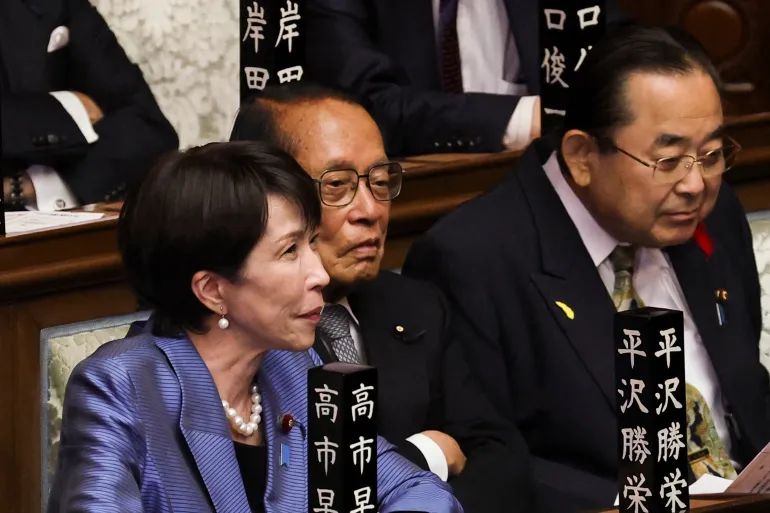
On October 21, 2025, Japan shattered its glass ceiling in one of the most significant political moments in decades. Sanae Takaichi, a 64-year-old ultraconservative and lifelong heavy metal enthusiast, was elected as Japan's first female prime minister, ending Japan's decades-long tradition of male-only leadership at the country's highest office.
In a parliamentary vote that reflected the shifting political landscape, Takaichi secured an overwhelming majority: 237 votes in the lower house (exceeding the required 233) and 125 votes in the upper house (just one vote above the simple majority needed). This historic win comes as Japan grapples with mounting inflation, sluggish economic growth, and political instability that has seen four different prime ministers in just five years.
Breaking the Glass Ceiling in Male-Dominated Japan
Takaichi's elevation marks a watershed moment for Japan, a nation where women currently hold only 16% of parliamentary seats and consistently ranks among the worst developed democracies for gender equality. Her election represents a profound shift in a patriarchal society that has historically sidelined women from positions of power.
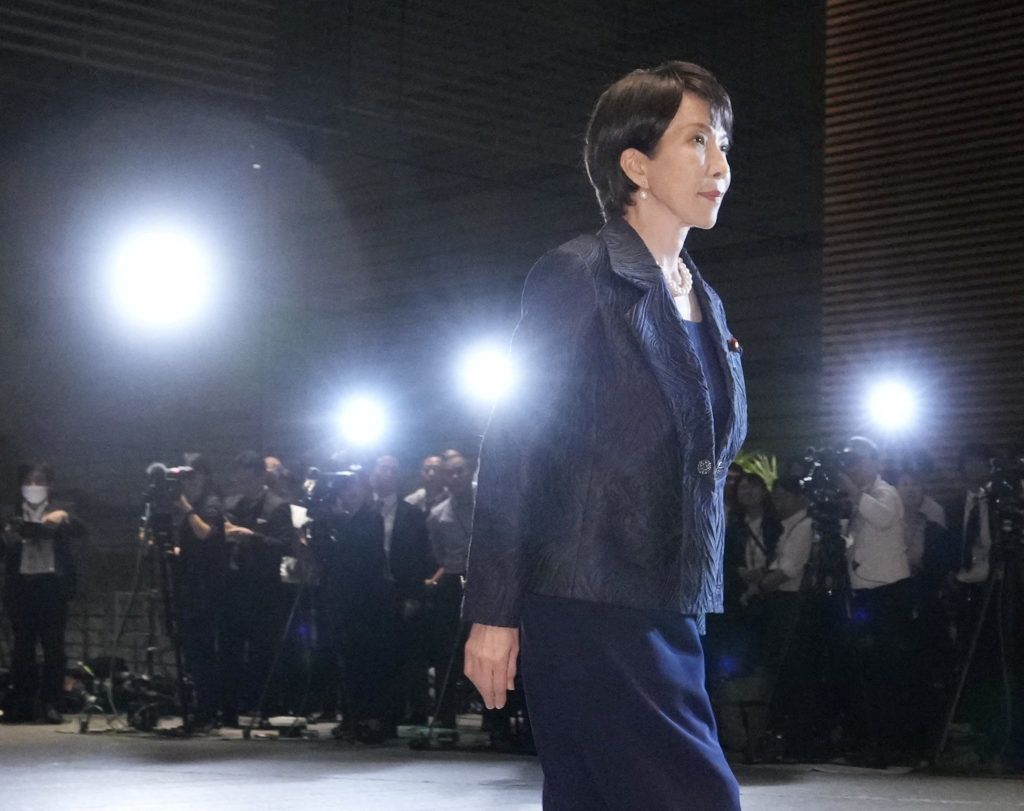
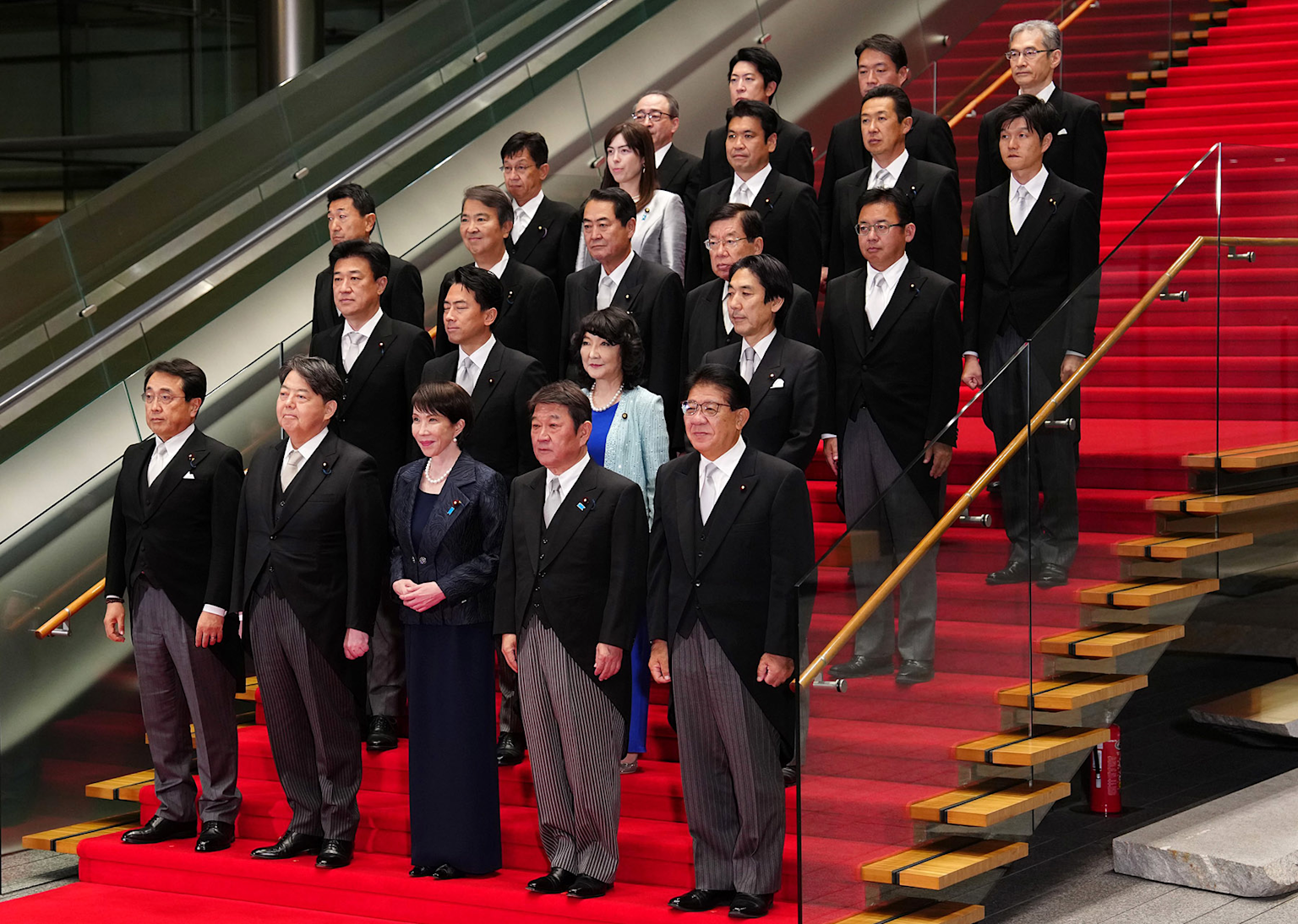
However, the celebration comes with significant caveats. Despite her historic status as the first female leader, Takaichi appointed only two women among her 19 cabinet ministers, falling short of her earlier promises to ensure robust female representation in government. Critics argue this reflects the party's broader challenge: only 13% of Liberal Democratic Party (LDP) lawmakers are women.
The Margaret Thatcher of Asia: Who is Sanae Takaichi?
Takaichi is no ordinary politician. At the heart of her identity lies an unconventional blend of hardcore conservatism and surprising cultural interests. The prime minister is an avid heavy metal enthusiast who still plays electronic drums at home to relieve stress. She counts Black Sabbath, Metallica, Deep Purple, and Iron Maiden among her favorite bands and has praised Japanese drummer Yoshiki of X JAPAN for his "technically brilliant" playing.
During a recent interview with a Japanese YouTuber, Takaichi joked: "I play after he goes to sleep," referring to her husband, before explaining her stress-relief ritual. "When I get irritated by my husband's choice of words or behaviour, I play the electronic drums after he's gone to bed... 'Burn' by Deep Purple is a staple. I play songs like this to let off steam."
This passion for rock music contrasts sharply with her political persona. Takaichi is openly inspired by Margaret Thatcher, Britain's first female prime minister and the original "Iron Lady." She has long admired Thatcher's "strength and womanly warmth," wearing blue suits as homage to her idol and even meeting Thatcher in London in 2013—a moment Takaichi later described as "life-changing."
A protégé of the late Prime Minister Shinzo Abe, Takaichi champions aggressive defense policies, constitutional revision to expand the Self-Defense Forces, and a hardline stance toward China and immigration. She advocates for "Takaichi-nomics"—an economic strategy reminiscent of Abe's expansionary fiscal and monetary policies designed to combat inflation and revitalize Japan's sluggish economy.
The Political Journey to the Top
Takaichi's path to power has been neither straightforward nor inevitable. The former television anchor and author first entered politics in 1993 as an independent member of the House of Representatives representing her home prefecture of Nara. She joined the LDP in 1996 and steadily climbed the party ranks, holding key ministerial positions including Minister for Internal Affairs and Communications under Abe and Minister of Economic Security from 2022 to 2024.
This was her third attempt at LDP party leadership. In 2021, she came third in the leadership race. In 2024, she finished first in the initial round but narrowly lost in a runoff. On October 4, 2025, she finally broke through, defeating fellow LDP member Shinjiro Koizumi with 185 votes to 156 in a runoff election.
However, her path to the premiership hit a critical snag when her longtime coalition partner, the centrist Komeito party, unexpectedly withdrew from the government alliance, uncomfortable with Takaichi's conservative policies and recent LDP scandals. This created a coalition crisis that threatened to derail her appointment entirely.
In a dramatic last-minute maneuver, Takaichi's LDP reached an 11th-hour coalition agreement with the Japan Innovation Party (Ishin), a right-leaning populist organization, just one day before the parliamentary vote. This fragile coalition government now depends on careful political navigation to pass legislation, as the combined parties hold only a slim majority in both houses.
Taking Charge: Economic Stimulus and New Cabinet
On her very first day in office, Takaichi wasted no time signaling her policy priorities. She ordered a comprehensive economic stimulus package exceeding last year's $92 billion—her first major economic initiative to address the mounting inflation crisis devastating Japanese households. The package focuses on three pillars: combating inflation through targeted relief, investing in strategic growth sectors like AI and semiconductors, and strengthening national security.
Key measures include eliminating the temporary gasoline tax, boosting grants to local governments to assist small and medium-sized enterprises, and implementing targeted subsidies for electricity and gas during winter months.
In a historic move, Takaichi named Satsuki Katayama as Japan's first female finance minister. A former finance ministry official and economist, Katayama brings substantial experience in economic matters and previously served as minister responsible for regional revitalization under Shinzo Abe. Her appointment alongside Takaichi signals a commitment to financial stability and gender representation at the highest levels.
The broader cabinet lineup reflects Takaichi's strategy to unify the fractious LDP: she appointed several of her defeated rivals to senior positions, including Motegi Toshimitsu as foreign affairs minister and Shinjiro Koizumi as defense minister—a calculated move to maintain party unity.
Facing Immediate International Challenges
Takaichi doesn't have the luxury of a honeymoon period. Her first major international test comes immediately: U.S. President Donald Trump is scheduled to visit Japan starting October 28, marking his first trip to the country in nearly six years. This meeting is critically important for both nations, with discussions expected to focus on deepening the U.S.-Japan alliance and addressing defense commitments.
Takaichi's conservative stance and pro-defense positions align well with Trump's expectations for increased Japanese military spending. However, she's reportedly adopting a cautious "wait-and-see" approach regarding a controversial $550 billion investment agreement announced in September, potentially reconsidering aspects of the deal.
Some analysts believe this pragmatism reflects Takaichi's strategy of maintaining harmony with Washington while defending Japanese interests—a lesson learned from her mentor Abe, who cultivated a close personal relationship with Trump based on shared interests in sumo wrestling, golf, and wagyu beef burgers.
The Conservative Agenda: What Takaichi Actually Stands For
While Takaichi's election represents a symbolic breakthrough for Japanese women, her policy platform is decidedly traditional and conservative. She opposes same-sex marriage, has resisted legislation allowing married couples to use different surnames (a change that would benefit many women retaining maiden names), and stands against women's inclusion in the imperial succession line.
Her nationalist policies, criticism of wartime accountability (including downplaying Japan's World War II history), and hardline position on immigration put her at odds with progressive movements in Japan and internationally. Despite this, she has made some modest gestures toward addressing women's health issues, including supporting tax incentives for companies offering childcare.
Gender equality advocates express significant ambivalence about her leadership. As one 21-year-old Japanese woman commented: "Everyone seems to think, 'Wow, she's the first female prime minister in Japanese history; this is a fantastic opportunity for women's empowerment and gender equality in Japan.' I consider that viewpoint rather simplistic. She upholds the patriarchal framework."
Challenges Mounting: Economic Pressure and Political Instability
Takaichi inherits a daunting in-tray. Japan's economy faces persistent challenges: inflation has remained above the Bank of Japan's 2% target for over three years, consumer purchasing power has weakened due to yen depreciation, and the government debt load far outweighs annual economic output. These economic pressures, combined with an aging population and shrinking workforce, create a complex puzzle for her new administration.
Her proposal for aggressive fiscal stimulus—dubbed "Takaichi-nomics"—has already sparked market volatility and investor concern. Some economists worry that expansionary spending amid already-elevated inflation could create a dangerous spiral of rising prices and currency weakness. The Bank of Japan, which recently began raising interest rates, may face political pressure to pause its normalization efforts.
Additionally, Takaichi leads a minority government dependent on coalition partners who could withdraw support at any moment. This fragility means she must navigate carefully to pass legislation, potentially compromising on key initiatives to maintain coalition unity.
International Implications
Beyond the U.S. relationship, Takaichi's hawkish stance toward China and her nationalist rhetoric have raised concerns in Seoul, as South Korea has been attempting to repair historically tense relations with Japan. Her role in deepening Japan's participation in the "Indo-Pacific" strategy—coordinating with India, Australia, and other nations to counter Chinese influence—is expected to intensify under her leadership.
India's Prime Minister Narendra Modi congratulated Takaichi on her election, expressing commitment to strengthening the India-Japan Strategic Partnership, suggesting continuity and alignment on regional security matters.
Frequently Asked Questions
Sanae Takaichi's elevation to the prime ministership represents a seismic shift in Japanese politics, breaking a centuries-old tradition of male-only leadership. Yet her election also embodies the contradictions of modern Japan—a symbolic victory for women that masks a fundamentally conservative agenda resistant to progressive change. As she navigates the treacherous waters of economic crisis, international tensions, and political fragility, Takaichi's success will ultimately be judged not by her historic gender, but by her ability to deliver results on the economy, security, and the people's hopes for a stronger, more prosperous Japan.