When you think of the largest protest in American history, what comes to mind? The 1963 March on Washington where Martin Luther King Jr. delivered his iconic "I Have a Dream" speech? The Vietnam War demonstrations? Think bigger. Much bigger.
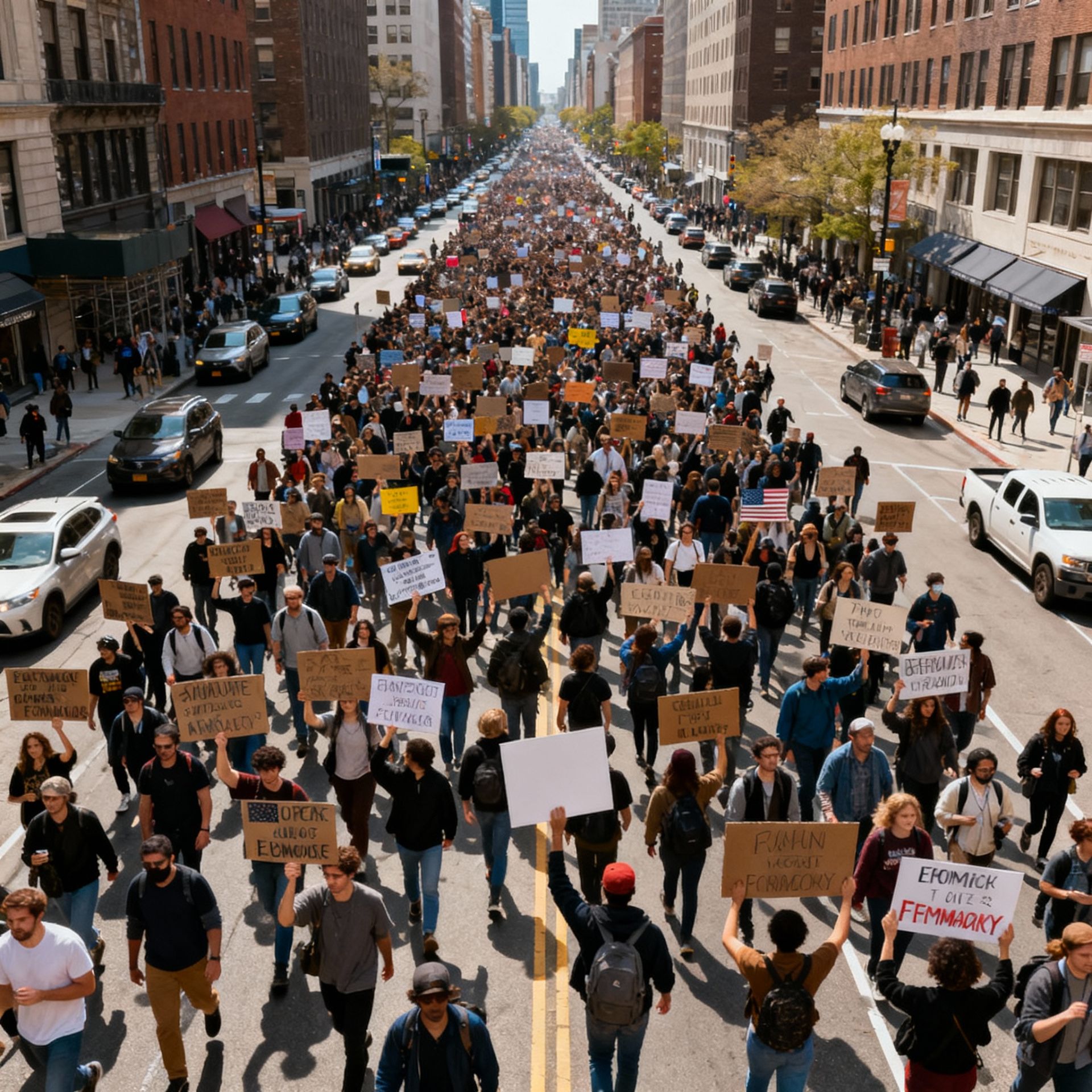
On October 18, 2025, nearly 7 million Americans flooded the streets in what organizers and data analysts now confirm as potentially the largest single-day nationwide demonstration in United States history. The "No Kings" protests shattered previous records, mobilizing crowds across more than 2,700 locations in all 50 states—from major metropolitan areas to tiny rural towns.
But here's what makes this even more remarkable: This wasn't the first time. Just four months earlier, on June 14, 2025, between 2 and 4.8 million people participated in the inaugural "No Kings" demonstrations across over 2,150 locations. That event alone rivaled—and possibly surpassed—what was previously considered the largest single-day protest in US history: the 2017 Women's March.
The Previous Record Holder: A Movement Born Overnight
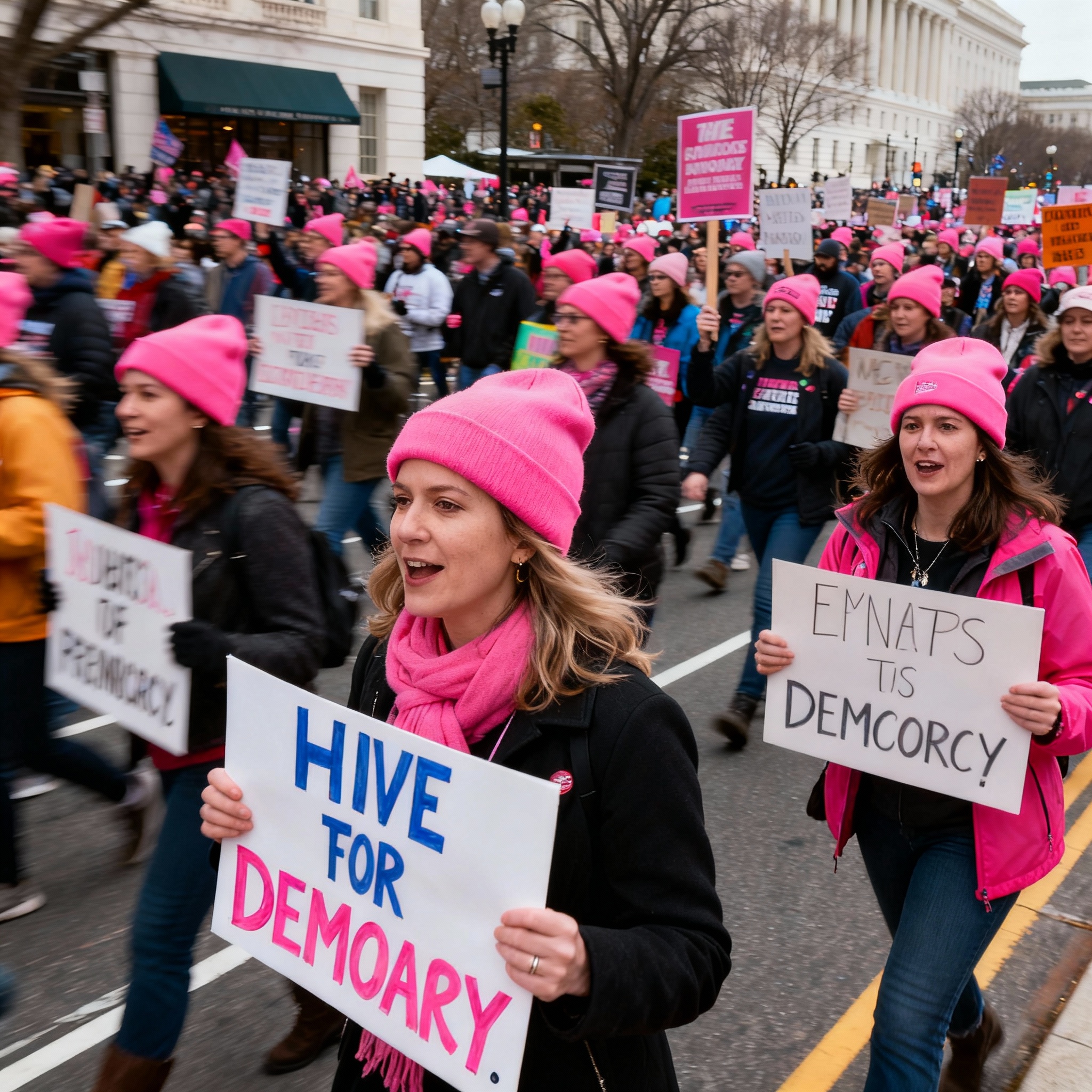
The Women's March on January 21, 2017—held just one day after Donald Trump's first inauguration—drew between 3.2 and 5.3 million participants across the United States, with Washington D.C. alone hosting 470,000 to over 1 million people. Crowd scientists from Manchester Metropolitan University estimated the D.C. march drew approximately three times more people than Trump's inauguration the day before.
What made the Women's March extraordinary wasn't just its size—it was the speed of its organization. The event went from scattered Facebook posts the day after the 2016 election to a coordinated global mobilization in just two months. The march featured prominent speakers including feminist icon Gloria Steinem, actresses America Ferrera and Scarlett Johansson, and singer Madonna, who delivered fiery speeches defending women's rights, immigration reform, and civil liberties.
According to Harvard researcher Erica Chenoweth, the Women's March "drew over 4 million people—between 1 and 1.6% of the U.S. population" and represented "the largest single-day demonstration in recorded U.S. history" at the time. The protests spread to over 650 locations domestically and inspired sister marches on all seven continents—yes, even Antarctica.
The Evolution: From "Resistance" to "No Kings"
Fast forward to 2025, and the scale of demonstrations has exploded even further. The "No Kings" movement—named to emphasize that America has no monarchs and rejects authoritarian rule—emerged in response to what organizers describe as President Trump's increasingly autocratic policies during his second term.
Jeremy Pressman, political science professor and co-director of the Crowd Counting Consortium at Harvard Kennedy School and University of Connecticut, noted that Trump's second term has generated dramatically more protest activity than his first. Since January 2025, there have been over 15,000 protests and rallies—three times more than the same period in 2017.
The June 14 "No Kings" protests drew an estimated 4-6 million participants across more than 2,000 cities. But the October 18 demonstrations dwarfed even that impressive turnout, with organizers reporting nearly 7 million attendees. This mobilization was 14 times larger than both of Trump's presidential inaugurations combined.
What Makes a Protest "The Largest"?
Measuring crowd size at protests is notoriously difficult and controversial. Estimates vary based on methodology, timing, and who's doing the counting. But several metrics help establish the scale:
Single-Day vs. Multi-Day Events
The George Floyd protests of 2020 were massive—possibly the largest movement in US history overall—but they occurred over multiple days and weeks. Estimates suggest 15-26 million Americans participated across the entire period from May to June 2020. The peak single day was June 6, 2020, with over 700 events in more than 600 cities. However, crowd counts for individual days were lower than the Women's March or No Kings protests.
Historical Context
Other major single-day events include:
First Earth Day (1970): Approximately 20 million Americans participated in environmental activities, though these were spread across thousands of separate events throughout the day, not concentrated marches
Hands Across America (1986): 5.4-6.5 million people held hands across the country for 15 minutes
March on Washington (1963): About 250,000-260,000 people
The "No Kings" October 2025 protests stand out because of their concentrated, coordinated nature: millions of people actively marching and demonstrating simultaneously across thousands of locations in a single day.
Why This Matters Beyond the Numbers
The significance of these protests extends far beyond impressive headcounts. Research by Harvard's Erica Chenoweth has shown that nonviolent campaigns are twice as likely to achieve their goals as violent ones. Moreover, when movements mobilize just 3.5% of a population, they've never failed to bring about significant political change.
The October 2025 "No Kings" protests potentially reached 1-2% of the US population in a single day. Combined with the June protests and ongoing mobilizations, the movement is approaching that critical 3.5% threshold.
The Power of Peaceful Resistance
Despite Republican leaders' warnings and several governors deploying National Guard troops ahead of the protests, the demonstrations remained overwhelmingly peaceful. The No Kings coalition trained tens of thousands of participants in de-escalation techniques and distributed "know your rights" materials.
"There is nothing more patriotic than protesting," read one sign at the Bethesda, Maryland demonstration. This sentiment captures the movement's core message: that dissent and peaceful assembly are fundamental American values, not threats to them.
The Digital Difference: How Social Media Changed Everything
Modern protests look fundamentally different from those of previous generations, largely thanks to social media. The Black Lives Matter movement of 2020 demonstrated how Instagram, Twitter, and other platforms could facilitate rapid mobilization and amplify messages.
Research analyzing 1.13 million Instagram posts during the 2020 protests revealed the emergence of "non-institutional opinion leaders such as meme groups, independent journalists, and fashion magazines"—a stark contrast to the more institution-driven nature of earlier movements.
Youth activists, in particular, have mastered digital organizing. Climate movements like Fridays for Future, inspired by Greta Thunberg, mobilized millions of students across over 100 countries by 2019. The "leaderless" nature of many social media-driven movements creates both opportunities and challenges—fostering flexibility and egalitarianism while sometimes lacking sustained organizational structures.
Who's Behind These Massive Mobilizations?
The "No Kings" protests were organized by a coalition of over 200 progressive organizations, including:
Indivisible (co-founded by Ezra Levin)
American Civil Liberties Union (ACLU)
5050/1 Movement
Public Citizen
American Federation of Teachers (AFT)
Service Employees International Union (SEIU)
MoveOn
Human Rights Campaign
United We Dream
Common Defense
League of Conservation Voters
National Nurses United
Reproductive Freedom for All
Funding comes from a mix of progressive foundations, labor unions, and grassroots donations. Conservative critics point to support from organizations like George Soros's Open Society Foundations, while organizers emphasize that most funding comes from small individual contributors.
What They're Actually Protesting
While Trump and Republican leaders dismissed the demonstrations as "Hate America rallies" or blamed them on "Antifa," protesters articulated specific grievances:
Immigration enforcement: Masked federal agents conducting street detentions without due process; deployment of thousands of National Guard troops and Marines to cities like Los Angeles
Democratic norms: Concerns about authoritarian power grabs and threats to constitutional checks and balances
Government shutdown: A prolonged federal shutdown cutting critical services while millions went without pay
Federal program cuts: Reductions to healthcare, education funding, and environmental protections
First Amendment rights: Defending free speech and peaceful assembly against what protesters view as governmental crackdowns on dissent
"The president believes his authority is unquestionable. However, in America, we do not have kings, and we will not yield to chaos, corruption, and cruelty," reads the movement's mission statement.
The Historical Precedent: America's Protest Tradition
These massive demonstrations fit within a long American tradition of using peaceful protest to drive social change. From Gandhi-inspired civil rights sit-ins to the Montgomery Bus Boycott, history shows that nonviolent resistance works.
The civil rights movement of the 1950s-60s established crucial First Amendment precedents through court battles. Cases like Edwards v. South Carolina (1963) explicitly protected the right to peacefully protest on public property. These hard-won freedoms now enable movements like "No Kings" to mobilize millions without legal barriers (though political obstacles remain).
Economic disinvestment and boycotts helped end apartheid in South Africa. The 1955 Montgomery Bus Boycott's 13-month campaign had such enormous financial impact that it led to the Supreme Court ruling segregation unconstitutional. These examples demonstrate that sustained, organized, peaceful pressure can topple even seemingly immovable systems of oppression.
What Happens Next?
The crucial question isn't just how many people showed up—it's whether these demonstrations translate into lasting political change. After the 2017 Women's March, organizers faced criticism about maintaining focus across so many issues. The movement worked to channel energy into voter registration, activist training, and organizing around specific causes like abortion rights.
The "No Kings" coalition faces similar challenges. With protests occurring amid a government shutdown and approaching midterm elections, organizers are focusing on sustained civic engagement rather than one-off demonstrations.
"Our work continues in big cities and small towns around this country and we will not back down," stated No Kings organizers after the October protests. They've promised "regular opportunities in the coming days and weeks to take action" and are sharing community rights resources.
The Bigger Picture: Democracy Under Pressure
Beyond the impressive crowd counts and logistical feats, these protests represent something more fundamental: millions of Americans actively defending democratic institutions they believe are under threat.
Political observers note that protests are occurring in a broader spectrum of counties—including many that voted Republican—compared to Trump's first term. This geographic spread suggests concerns about authoritarianism transcend simple partisan divides.
As youth climate activist research shows, when young people and marginalized communities see their futures at stake, they reject waiting for change. The "No Kings" name itself invokes America's founding rejection of monarchy—a constitutional principle that resonates across ideological lines.
Whether you view these protests as patriotic expressions of First Amendment rights or as partisan disruptions depends largely on your political perspective. But the numbers are undeniable: more Americans are taking to the streets in 2025 than at any other point in recorded history.
The Legacy Still Being Written
History will ultimately judge whether the "No Kings" protests and their predecessors achieve their stated goals. But they've already accomplished something remarkable: proving that millions of Americans are willing to physically show up for causes they believe in.
In an era of slacktivism and performative social media posts, the act of marching remains powerful. As Gloria Steinem told Women's March crowds in 2017: "Thank you for understanding that sometimes we must put our bodies where our beliefs are. Sometimes pressing send is not enough".
From the 260,000 who gathered for the 1963 March on Washington to the 7 million who filled streets in October 2025, Americans have consistently used their First Amendment rights to demand change. The scale has grown exponentially—aided by digital organizing tools that would have seemed like science fiction just decades ago.
Whether these movements succeed in their immediate policy goals or simply shape the broader political conversation, they've already secured their place in history. The largest protests America has ever seen aren't ancient history—they're happening right now.
And if current trends continue, we haven't seen the peak yet.